








One of the quiet hopes every parent carries is that their child will grow up confident—comfortable with who they are, capable of making decisions, and unafraid to try. True confidence does not come from constant praise or comparison. It develops slowly, through everyday experiences that tell a child, “I can do this.”
Montessori education places deep trust in this idea.
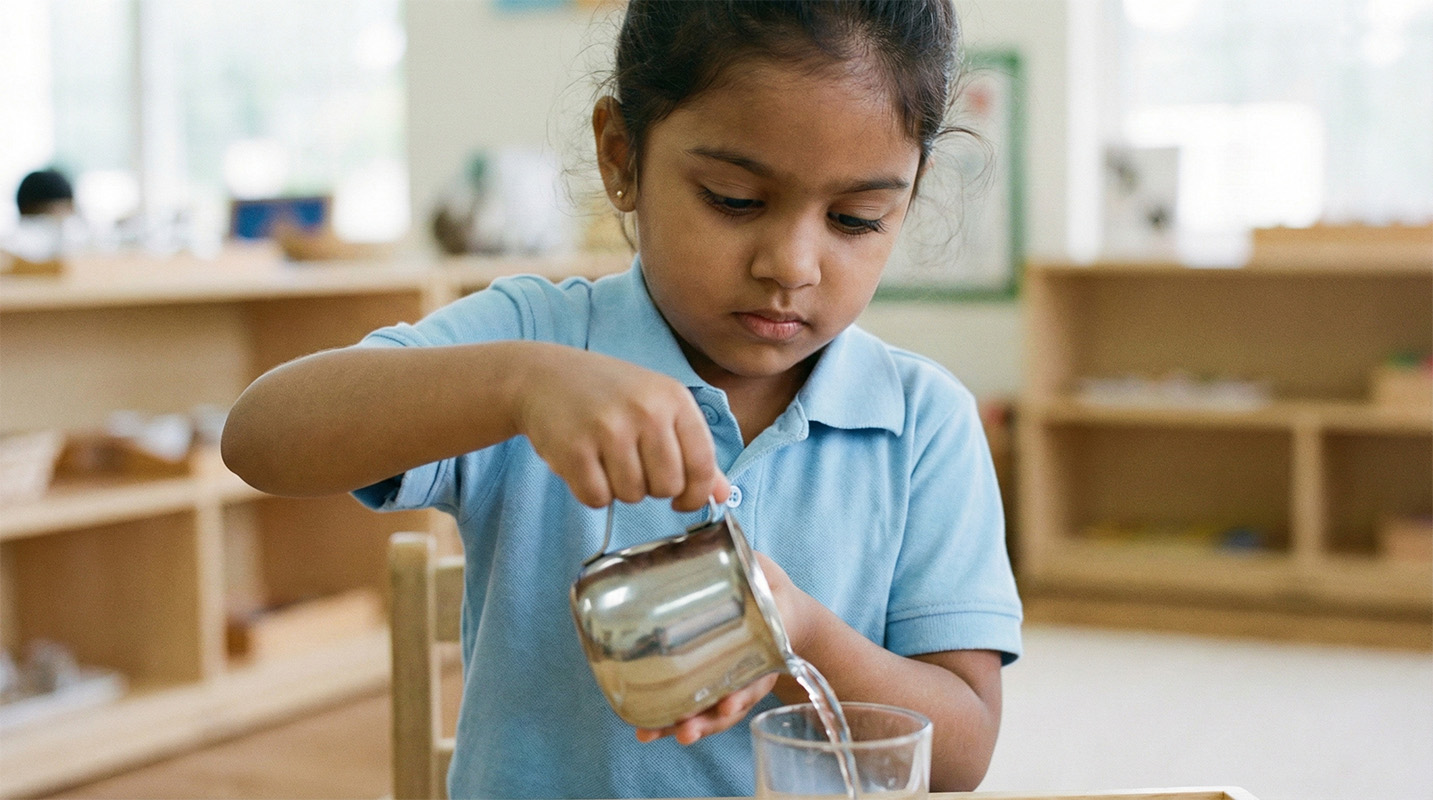
From an early age, children are encouraged to participate actively in their own learning. Rather than being told what to do at every step, they are guided to explore, choose, and complete tasks independently. These small moments of responsibility, repeated day after day, lay the foundation for lasting confidence.
Independence Is a Skill, Not an Expectation
In many educational settings, independence is expected before it is taught. Montessori takes a different approach. Independence is carefully nurtured through thoughtfully designed environments and gentle guidance.
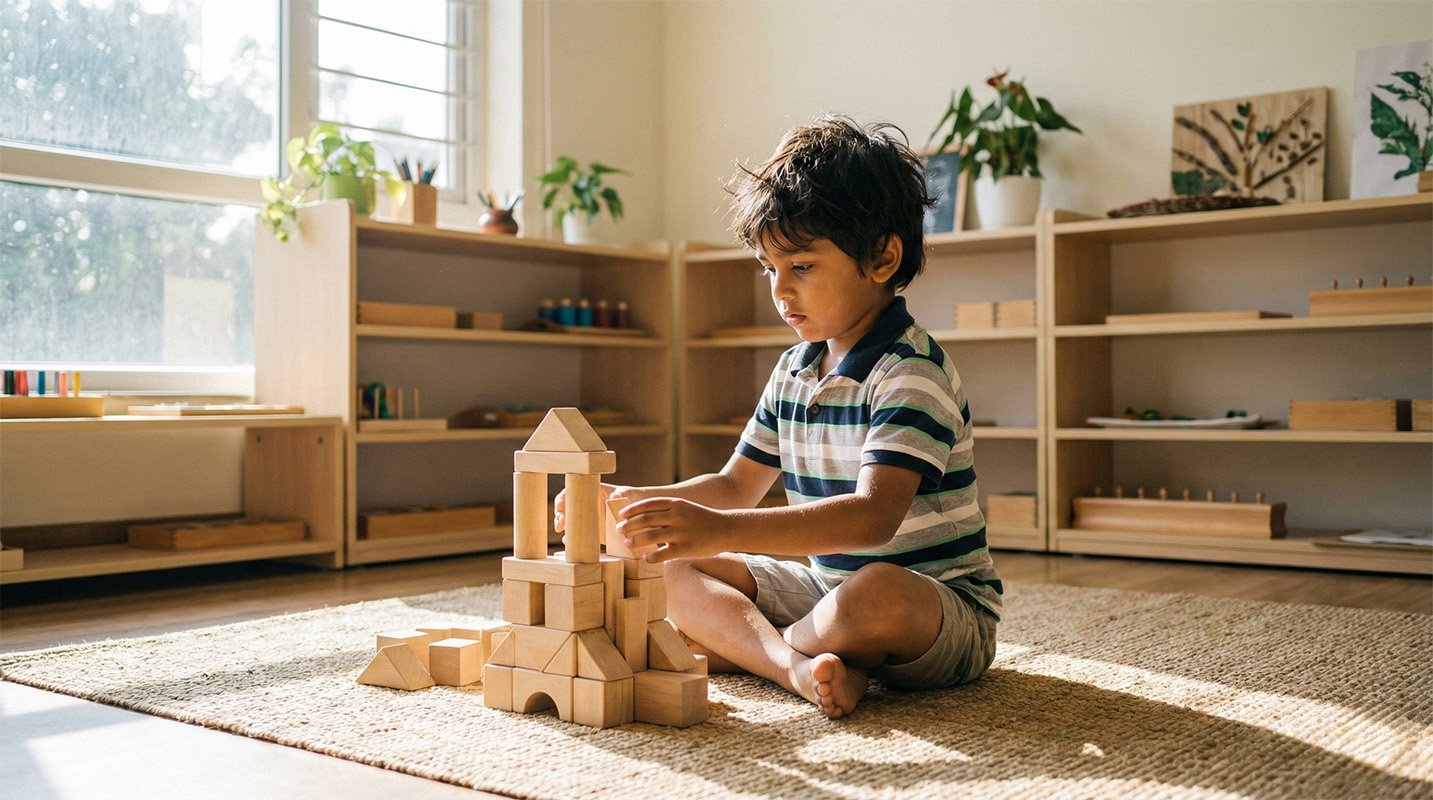
Classrooms are structured in a way that allows children to move freely, access learning materials independently, and work at a pace that suits their development. Teachers observe closely, stepping in only when support is needed. This balance of freedom and guidance helps children feel secure while still encouraging them to stretch their abilities.
Over time, children learn to focus, manage their time, and take responsibility for their work—skills that are valuable not just in school, but throughout life.
Confidence Through Meaningful Choice
When children are trusted with choices, they begin to trust themselves. In a Montessori-inspired classroom, children make age-appropriate decisions—what to work on, how long to spend on a task, and when they feel ready to move forward.
These choices are not random; they are supported by structure and clear expectations. As children experience the outcomes of their decisions, they develop judgment, resilience, and self-belief. Confidence grows naturally, not from competition or comparison, but from personal achievement.
A Gentle Shift Away from Fear-Based Learning
In many traditional systems, learning can become tied to fear—fear of mistakes, fear of marks, fear of falling behind. Montessori education offers a gentler alternative. Mistakes are seen as part of the learning process, not as failures to be avoided.
This approach is especially important in the Indian context, where academic pressure often begins early. By focusing on understanding rather than performance alone, children develop a healthier relationship with learning and a stronger sense of self-worth.
Independence Within a Supportive Structure
At Tharakans High, Montessori principles guide the way independence is nurtured. Students are encouraged to think, question, and take ownership of their learning, while teachers provide clarity, consistency, and support.
The aim is not to remove structure, but to use it wisely—so that students grow into self-directed learners who are confident, responsible, and academically prepared.
Growing Confident Learners for Life
Confidence built through independence lasts far beyond the classroom. Children who believe in their ability to learn and adapt carry that belief into higher education, careers, and relationships.
By nurturing independence from an early age, Montessori education helps children grow into individuals who are not just successful students, but confident, capable human beings.